WisePC
Menu
Ready-made recommendations

Best AI homelab under 2000

A performance-focused build for local LLM inference, image generation and AI experimentation.

Recommended build

Long-term build — expandable & future-proof

Architecture: tower build on LGA 2066 + Intel X299

≈ €1,473

Total

  • CPU threads12
  • RAM80 GB
  • Storage3 TB
  • GPUai
Performance
83
Value
83
Efficiency
35
Expandability
100
Silence
95
Longevity
100
Reliability
60
Overall
90
Idle
78 W
Typical
197 W
Peak
418 W
Energy / year
≈ €431

Assessmentbalanced

Parts & prices

  • cpu

    Intel Core i7 7820X

    8C/16T · 4.5 GHz · LGA 2066 · 140 W

    ≈ €224est.
  • motherboard

    Gigabyte X299 AORUS Gaming 3 Pro LGA2066 DDR4 ATX

    Intel X299 · ATX · 4× M.2

    ≈ €203est.
  • ram

    Corsair Vengeance LPX Black / Yellow DDR4-4000 CL19 128GB (8x16GB)

    128 GB DDR4 · 4000 MT/s

    ≈ €258est.
  • case

    Fractal Design Meshify C ATX Mid Tower Black

    ATX/MATX/ITX · 2× 3.5″

    €94
  • cooling

    Thermalright Le Grand Macho Air 159mm Fanless

    passive · 150 W TDP

    ≈ €35est.
  • psu

    Mistel MX650 Black FANLESS ATX 650W Fully Modular 80+ Platinum

    650 W · platinum · modular

    ≈ €97est.
  • storage

    Rocket Q NVMe SSD

    NVME · 8 TB

    €122
  • gpu

    Asus Prime Radeon RX 9070 GRE EVO OC Edition 12GB GDDR6

    12 GB VRAM · 220 W · ROCM

    ≈ €440est.
Total≈ €1,473

WisePC may earn a commission from these links. It never changes the recommendation.

The verdict

Based on your goals you need roughly 12 CPU threads, 80GB RAM and 3TB of storage with ai GPU capability. This system runs 24/7, so energy matters. Recommended: the Long-term build — expandable & future-proof — 1473€ purchase, ~78W idle, ~431€/year energy (≈1294€ over 3 years). Intel Core i7 7820X: 16 threads covers the 12 needed with headroom. Motherboard Intel X299 (LGA 2066): matches the CPU socket and case size. RAM: 128GB DDR4 — meets the 80GB the workload requires. Asus Prime Radeon RX 9070 GRE EVO OC Edition 12GB GDDR6: 12GB VRAM selected for your ai GPU need. Chose Intel Core i7 7820X over Intel Core Ultra 5 250K Plus: better overall fit for your priorities. Build DNA: performance 83, value 83, efficiency 35, expandability 100, silence 95, longevity 100 — overall 90/100. Heads-up: Requested 2500 Mbps but board Intel X299 has max 1000 Mbps onboard and no free PCIe slot — staying on onboard networking. Add a board with a free slot for 2.5G/10G. What limits you first: CPU. Alternatives: Smart build — best all-round — 2205€, DNA 90/100, balanced · Value build — most for your money — 1372€, DNA 85/100, balanced · Performance build — maximum capability — 2002€, DNA 90/100, balanced.

Why this build

  • Intel Core i7 7820X: 16 threads covers the 12 needed with headroom.
  • Motherboard Intel X299 (LGA 2066): matches the CPU socket and case size.
  • RAM: 128GB DDR4 — meets the 80GB the workload requires.
  • Asus Prime Radeon RX 9070 GRE EVO OC Edition 12GB GDDR6: 12GB VRAM selected for your ai GPU need.
  • Chose Intel Core i7 7820X over Intel Core Ultra 5 250K Plus: better overall fit for your priorities.

Who should choose it

  • 2 free drive bay(s), 0 free PCIe slot(s) and 0 free RAM slot(s) keep the upgrade path open for years.
  • Built to absorb storage and compute growth without replacing the platform.

Why not the alternative

  • Long-term build — expandable & future-proof beats "Smart build — best all-round" on performance -17, value +13, efficiency -7 — that is why it is recommended for your priorities.
  • Long-term build — expandable & future-proof beats "Value build — most for your money" on efficiency -23 — that is why it is recommended for your priorities.

What it sacrifices

  • Higher upfront cost today — you pay for expansion capacity before you need it.

System blueprint

The system as a whole — before the shopping list.

diy · tower build on LGA 2066 + Intel X299

System blueprint

The system as a whole — before the shopping list.

Mission

  • Local AI inference· primary · 1 users
  • Image generation· secondary · 1 users
  • AI experimentation· secondary · 1 users

Constraints

Budget
€2,000
Energy priority
3/10
Noise priority
2/10
Expansion priority
5/10

Recommended architecture

diy · tower build on LGA 2066 + Intel X299

Compute
Intel Core i7 7820X
Memory
Corsair Vengeance LPX Black / Yellow DDR4-4000 CL19 128GB (8x16GB)
Storage
Rocket Q NVMe SSD
Networking
1G onboard
Cooling
Thermalright Le Grand Macho Air 159mm Fanless
Power
Mistel MX650 Black FANLESS ATX 650W Fully Modular 80+ Platinum
Expansion
3× M.2, 8× SATA, 2 bay

What am I actually paying for?

We split your build into the performance you need, the performance you're buying, and the performance you're likely to use day-to-day. When the gap is wide, you're overbuying.

BALANCED — the build is sized close to what the workload requires.

BALANCED — the build is sized close to what the workload requires.

Performance I needPerformance I buyLikely to use
CPU threads12168
RAM8012864
Storageoverbuy383
GPU VRAM121212
Network2.5G1.0G1.0G

What this means

  • The build is sized close to what the workload requires.

Scoring & Risk

An explainable future-proof score, the Homelab Risk Score, a final pre-purchase audit and what will become the limiting factor over time.

74Moderate risk2

Future-proof score

Strong future-proofing

74

Strong future-proofing (74/100) — this build should stay relevant for years without major surgery.

Upgrade path75

DIY build — the CPU, motherboard and PSU can each be upgraded independently without replacing the whole system.

Expansion100

Expansion headroom: 0 PCIe slot(s), 3 M.2, 8 SATA, 2 drive bay(s), 0 RAM slot(s) free.

Storage growth90

Storage is 38% utilized with 2 free drive bay(s) and 8 free SATA port(s).

Memory growth20

0 RAM slot(s) free; memory is 63% utilized.

Networking55

Networking is 1000 Mbps.

Replacement ease90

ATX form factor with standard, socketed components — most parts are easy to replace.

Workload change85

A 12GB GPU is present — AI and transcoding workloads are covered.

Homelab Risk Score

Moderate risk

46

Moderate risk (46/100) — a few items are worth fixing before you commit (see checklist).

Single point of failure

Risk: critical

All data sits on a single drive with no redundancy — one failure means total loss.

Fix: Add at least a mirror (RAID 1/ZFS mirror) for irreplaceable data, or an additional parity drive for larger arrays.

Storage risk

Risk: low

Solid-state storage — no moving parts, low mechanical failure risk.

Fix: For an always-on system, prefer NAS/CMR-rated drives; monitor SMART and replace before the warranty ends.

Data loss risk

Risk: high

1 drive(s) with no redundancy — a single SSD/controller failure can still lose data.

Fix: Add redundancy and an off-site/off-box backup for anything irreplaceable.

Power risk

Risk: low

PSU is 650W, peak load 418W (64%).

Fix: PSU sizing leaves healthy headroom for spikes and future parts.

Network risk

Risk: critical

The workload wants 2500 Mbps but the config only provides 1000 Mbps.

Fix: Add a 2.5G NIC or upgrade the platform.

Expansion risk

Risk: low

0 PCIe, 3 M.2, 8 SATA, 2 bays free.

Fix: Healthy room for future drives, NICs and accelerators.

Upgrade risk

Risk: low

20117 platform — current generation with a forward-looking socket/feature set.

Fix: Buy for the workload, not the socket — upgrade paths are a bonus, not a guarantee.

Final build audit

Audit found 1 critical and 1 warning item(s) worth fixing before you buy.

1 Critical1 Warning1 Optimization2 Optional1 Future

No storage redundancy

Critical

1 drive(s) with no mirror or parity for the data you plan to store.

Action: Add at least a mirror for irreplaceable data before you migrate anything.

Category: storage

Review

Warning

Requested 2500 Mbps but board Intel X299 has max 1000 Mbps onboard and no free PCIe slot — staying on onboard networking. Add a board with a free slot for 2.5G/10G.

Action: Weigh this trade-off against your priorities.

Category: balance

Plan faster networking

Optimization

1G networking is fine today but will bottleneck multi-user media or big NAS transfers at 3TB.

Action: Budget for a 2.5G/10G NIC and switch later, or spec it now.

Category: network

Keep a backup off-box

Optional

Redundancy inside the box does not survive fire, theft or a whole-array fault.

Action: Mirror the important data to an external drive, a second box, or cloud.

Category: storage

More VRAM for AI

Optional

Local AI/inference benefits strongly from 16GB+ VRAM.

Action: Consider a higher-VRAM GPU if AI is a serious goal.

Category: ai

Drive bays remain

Future

2 drive bay(s) free for future capacity.

Action: Expand capacity in pairs (mirror/parity) when needed.

Category: storage

What becomes the limit

RAM is maxed out is the most likely thing to date this build within 1-2y.

Horizon: 1-2y

RAM is maxed out

Why: All RAM slots are used and the workload already sits at 63% — the next memory need means replacing kits or a new build.

What to do: Buy a single larger kit now, or plan the RAM for the full lifecycle.

Horizon: 3-5y

1G networking becomes the ceiling

Why: A 1000 Mbps link will cap NAS transfers and multi-user media before the CPU or disks do.

What to do: Factor a NIC into the next hardware purchase.

What limits you first

CPU is the closest to its limit (75% of capacity in use) — it will likely force the next upgrade.

Smart next upgrades

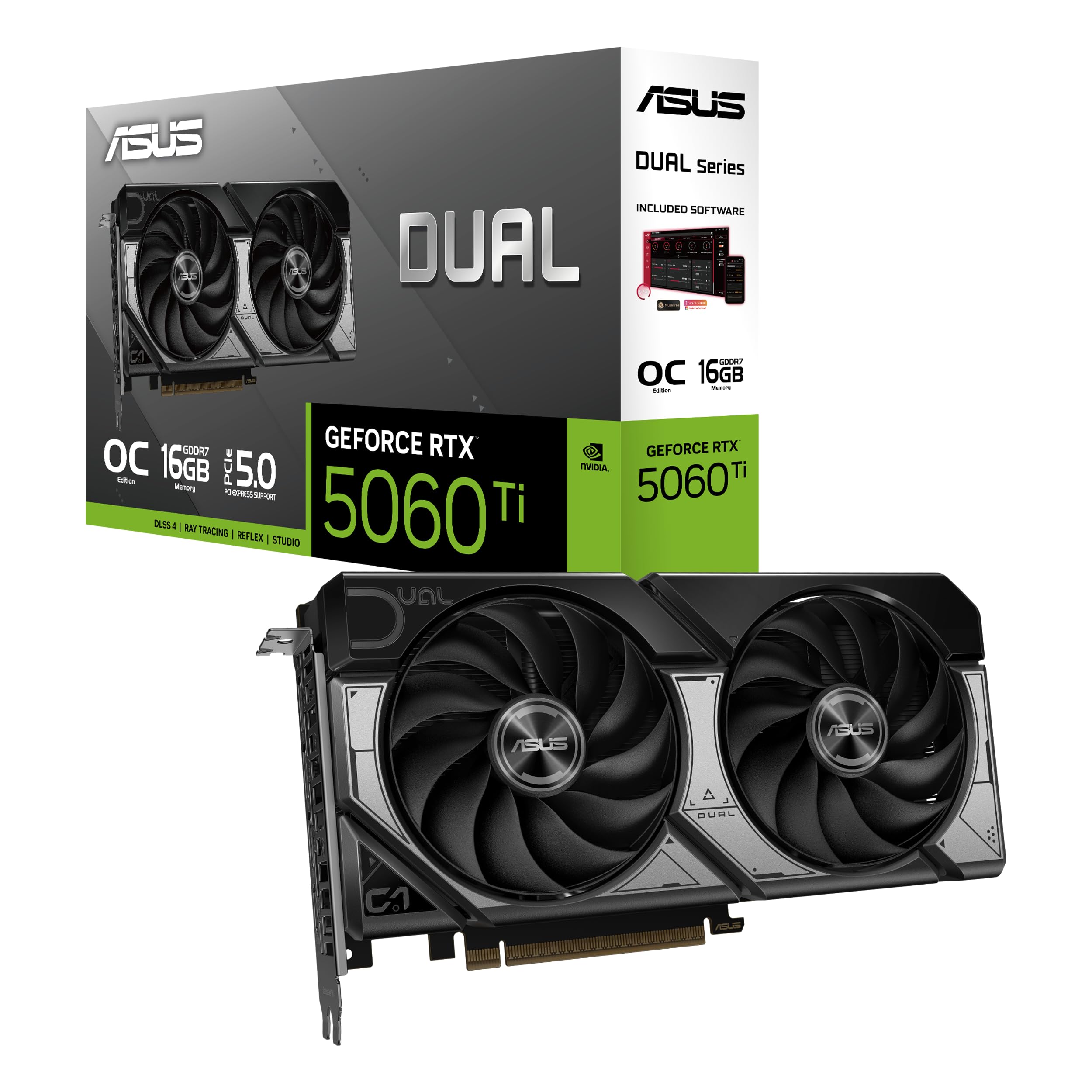
  1. 1Upgrade gpu to ASUS Dual Radeon RX 9060 XT 16GB GDDR6
  2. 2Upgrade cpu to Intel Core i9 7900X 3.3 GHz 10-Core LGA2066
  3. 3Upgrade storage to Western Digital Purple Pro 12TB HDD 3.5" SATA

Other builds to consider

Runner-up variants the engine generated for the same scenario — tap one to see its parts.

Smart build — best all-round

tower build on LGA 1851 + Intel B860 · Idle 70 W · balanced

≈ €2,205

Idle
70 W
Typical
166 W
Energy / year
≈ €363
RoleComponentQtyPriceBuy
cpuIntel Core Ultra 7 270K Plus1€474
motherboardAsus B860 PRIME B860M-A LGA1851 DDR5 Micro ATX1€189
ramKingston FURY Renegade Pro Registered Black DDR5-6400 CL32 128GB (4x32GB)1≈ €425
caseFractal Design Meshify C ATX Mid Tower Black1€94
coolingThermalright Le Grand Macho Air 159mm Fanless1≈ €35
psuSeaSonic PRIME Fanless Black 700W Fully Modular 80+ Titanium Certified1€283
storageRocket Q NVMe SSD1€122
gpuASUS Dual Radeon RX 9060 XT 16GB GDDR61€583
Total:≈ €2,205

Value build — most for your money

tower build on LGA 1700 + Intel Z790 · Idle 51 W · balanced

≈ €1,372

Idle
51 W
Typical
101 W
Energy / year
≈ €221
RoleComponentQtyPriceBuy
cpuIntel Core i5 14400F1€187
motherboardGigabyte Z790 AORUS ELITE AX DDR4 ATX1≈ €139
ramG.Skill Trident Z Royal Silver DDR4-3200 CL14 128GB (4x32GB)1≈ €258
caseFractal Design Meshify C ATX Mid Tower Black1€94
coolingThermalright Le Grand Macho Air 159mm Fanless1≈ €35
psuMistel MX650 Black FANLESS ATX 650W Fully Modular 80+ Platinum1≈ €97
storageRocket Q NVMe SSD1€122
gpuLenovo RTX A2000 Black 12GB GDDR61≈ €440
Total:≈ €1,372

Performance build — maximum capability

tower build on LGA 1851 + Intel B860 · Idle 68 W · balanced

≈ €2,002

Idle
68 W
Typical
164 W
Energy / year
≈ €360
RoleComponentQtyPriceBuy
cpuIntel Core Ultra 7 270K Plus1€474
motherboardAsus B860 PRIME B860M-A LGA1851 DDR5 Micro ATX1€189
ramKingston FURY Renegade Pro Registered Black DDR5-6400 CL32 128GB (4x32GB)1≈ €425
caseFractal Design Meshify C ATX Mid Tower Black1€94
coolingThermalright Le Grand Macho Air 159mm Fanless1≈ €35
psuSeaSonic Prime Fanless PX-500 Fanless ATX 500W Fully Modular 80+ Platinum Certified1≈ €80
storageRocket Q NVMe SSD1€122
gpuASUS Dual Radeon RX 9060 XT 16GB GDDR61€583
Total:≈ €2,002

Community

0 built it · 0 recommend it · 0 photos

Workload guides behind this build

Explore other builds